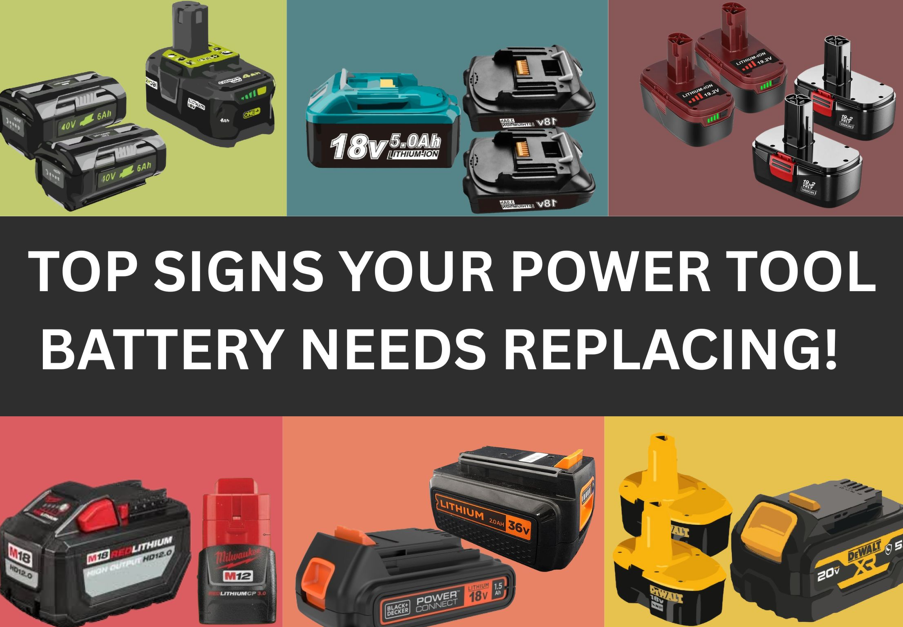
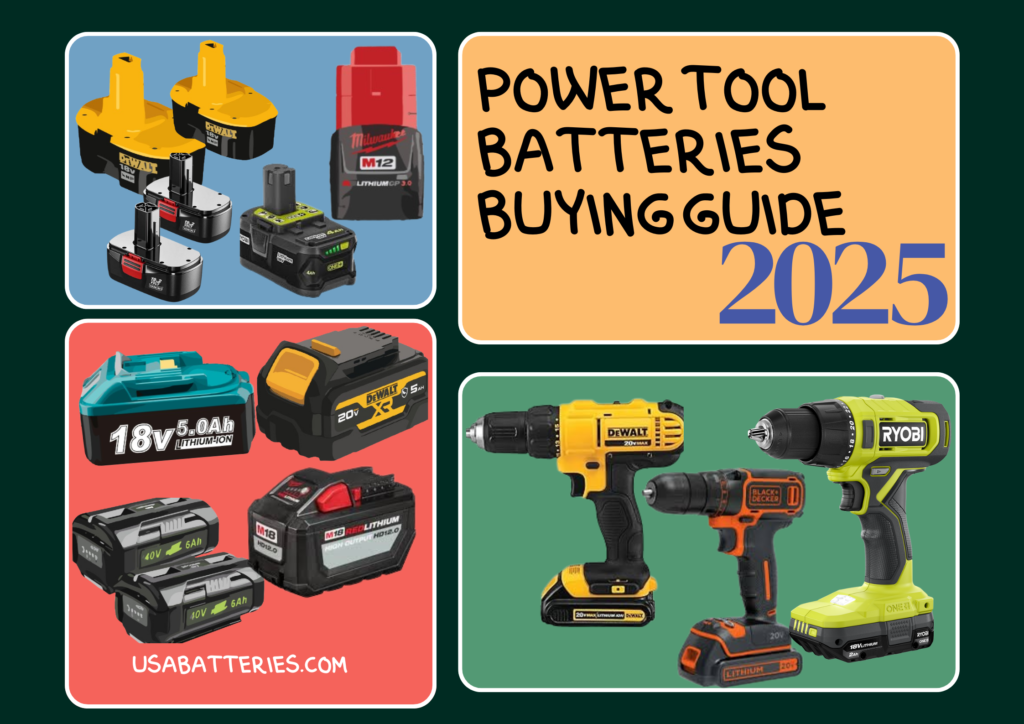
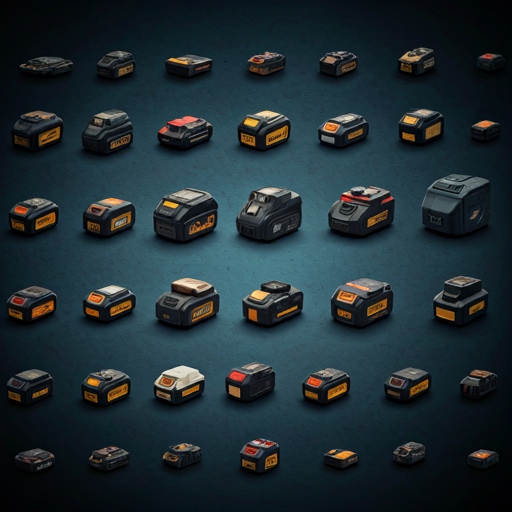
You can be more efficient, precise, and free with cordless tools—but only if your power tool battery last. Whether you’re drilling, cutting, or assembling, a dead or underperforming battery can put a stop to any project. Knowing the symptoms of a failing battery will help you avoid aggravation, downtime, and needless costs with Ryobi, DeWalt, Makita, Craftsman, and Milwaukee.
In order to keep your tools powered and your projects on schedule, we’ll answer frequently asked questions, provide brand-specific advice, explain compatibility and maintenance procedures, show you how to identify a failing battery, and direct you to the best replacement options.
Signs that your Battery Needs Replacing!
Here are the most common warning signs that your battery is losing its edge:
Sign
What It Means
Recommended Action
Reduced runtime
The battery no longer holds a charge for the expected duration
Monitor runtime and consider replacement
Slow or failed charging
Charger struggles to reach full charge
Test battery health; replace if it persists
Tool performance drops
Reduced torque or stalling under load
Replace the battery to restore performance
Physical damage
Bulging, leaks, cracks, or corrosion
Replace immediately (safety risk)
Overheating
The battery gets hot even under normal use
Stop using; replace or inspect cells
Voltage drop under load
Voltage falls below the rated level
Test with a multimeter; replace if persistent
Age & cycle count
The battery has gone through hundreds of cycles
Replace after 2–5 years, depending on chemistry
Why Power Tool Batteries Fail?
Understanding why batteries wear out helps prevent early failures:
Wear & tear from charge cycles – Every full charge/discharge reduces capacity.
Brand/platform – OEM packs (Ryobi batteries, DeWalt batteries, Makita batteries, Craftsman batteries) often have built-in protection; compatible replacements are possible but may lack safeguards.
Power Tool Battery Repair vs Replacement.
Repair/Rebuild: Replacing individual cells can extend life if the casing is intact.
Maintenance: Cleaning contacts, balancing cells, or conditioning can restore partial performance.
Replacement: Required if the battery is swollen, leaking, or unsafe.
Tips to Extend Power Tool Battery Life.
Store in a cool, dry environment.
For extended storage, keep a partial charge (40–60% for Li-ion batteries).
Make use of the charger that the manufacturer recommends.
Steer clear of deep discharges.
If you’re using more than one pack, rotate the batteries.
Before charging, allow batteries to cool.
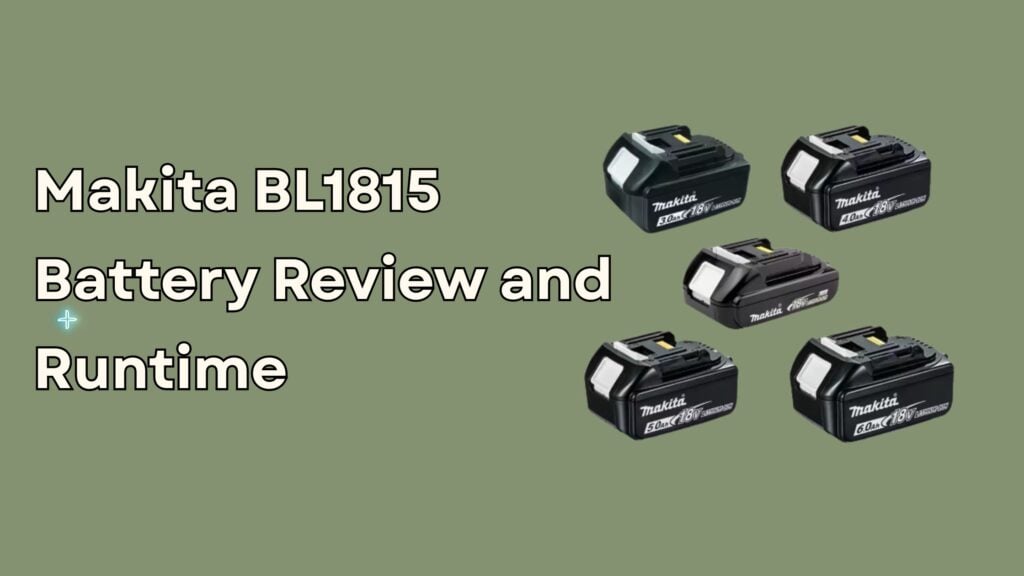
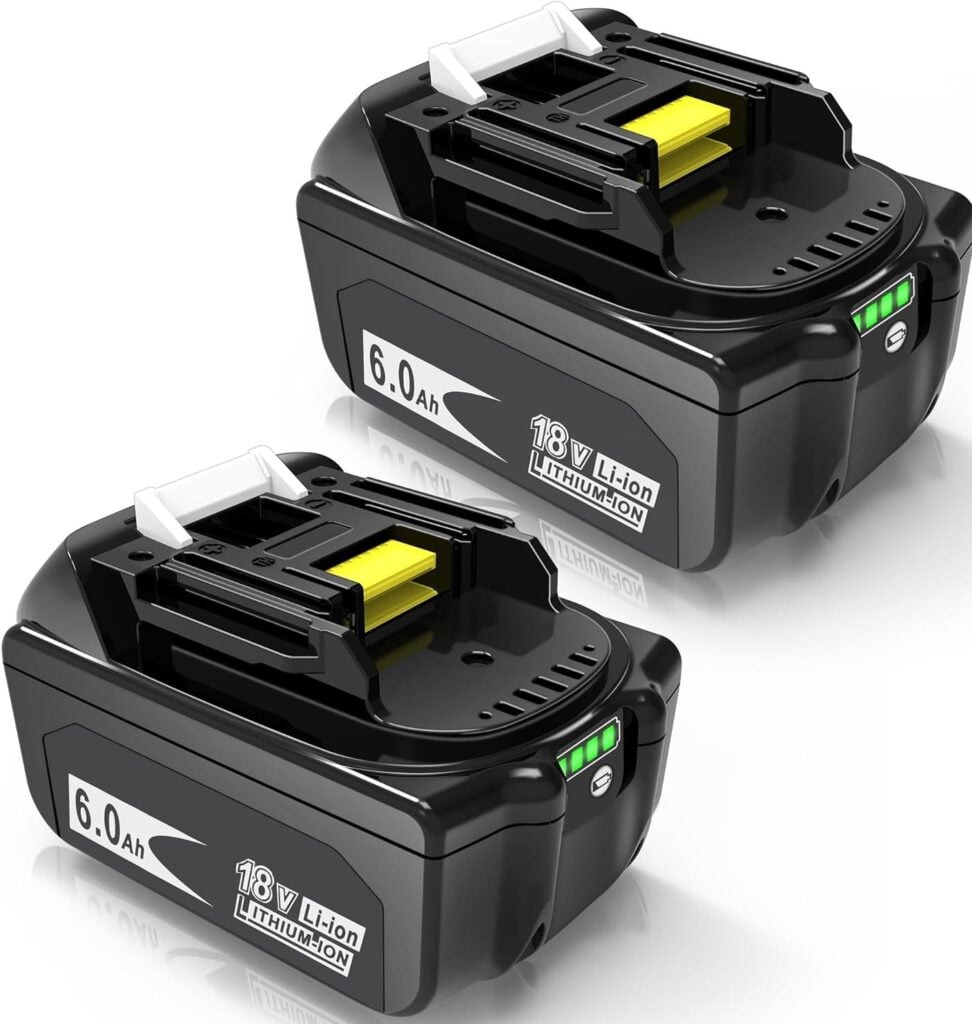
This applies to Ryobi 40V battery, DeWalt Max 20V battery, Milwaukee M18 battery, Makita 6.0 Ah battery, and Craftsman V20 battery alike.
FAQs.
Q: How to tell if a battery needs replacing? Watch for signs like reduced runtime, slow charging, overheating, voltage drops, or physical damage such as swelling, leakage, or cracks. If your tool performance is noticeably weaker even after a full charge, it’s a strong indicator that the battery is near the end of its life.
Q: How long does a power tool battery last? Lifespan varies by chemistry and usage:
Li-ion batteries typically last 3–5 years or 300–500 charge cycles.
NiMH batteries last around 2–4 years, while NiCd batteries last 2–3 years. Cycle count and charging habits often affect longevity more than age alone.
Q: How to check a power tool battery’s health? You can assess battery health with these steps:
Measure voltage under load using a multimeter while the tool is operating.
Perform a runtime test: Fully charge and run the tool, comparing to the expected performance.
Monitor charging behavior: Slow charging, error lights, or failure to reach full charge indicate weakening cells.
Visual inspection: Look for swelling, leaks, corrosion, or other damage.
Temperature check: Overheating during normal use signals internal issues.
Q: How do I know if my 18V battery is bad? Signs include: rapid drop in runtime, tool stalling under load, excessive heat, swelling or deformation, and charger error codes. If multiple symptoms appear, replacement is recommended.
Q: Can I repair a power tool battery, or should I replace it? Some batteries can be repaired by replacing individual cells, especially Li-ion packs, if the casing is intact. Cleaning contacts, balancing cells, or conditioning can restore partial performance. However, swollen, leaking, or damaged batteries should always be replaced for safety.
Q: Are all batteries of the same voltage compatible with my tool? Not always. Always match the battery’s voltage, chemistry, and platform. For example, a Ryobi 18V battery fits Ryobi 18V tools, but not DeWalt 20V tools. Some OEM brands have proprietary connectors, so using compatible replacements is safest.
Q: How can I extend the life of my power tool battery? To maximize lifespan:
Store batteries in a cool, dry place.
Avoid deep discharges; recharge at around 40–60% for Li-ion batteries when storing long-term.
Use the manufacturer-recommended charger.
Rotate multiple batteries if available.
Avoid exposing batteries to high heat or direct sunlight.
Q: Why does my battery lose power faster than it used to? Reduced runtime is often caused by age, excessive charge cycles, extreme temperatures, or improper storage. Even high-capacity packs like the Makita 6.0 Ah battery or DeWalt Max 20V battery degrade over time.
Q: What’s the difference between a battery needing replacement versus maintenance? Maintenance issues include dirty contacts, minor voltage imbalance, or partial cell degradation. Replacement is required when the battery is swollen, leaking, overheating, or shows significant loss of runtime.
Power Through Every Project.
Your power tool battery is the lifeblood of your cordless setup. Whether it’s Ryobi batteries, DeWalt batteries, Makita batteries, Craftsman batteries, or Milwaukee tool batteries, staying ahead of battery wear ensures uninterrupted work, maximum performance, and safety.
Watch for runtime drops, charging issues, overheating, and physical damage. Test battery health regularly, replace when needed, and maintain your packs properly. Investing in good battery care lets your cordless drill, Ryobi One Plus, DeWalt 20V battery, Makita 6.0 Ah battery, and Craftsman V20 battery perform like new—every single project, every time.
Find All Your Battery Options at USA Batteries.
Searching for substitutes? The whole line of Ryobi, DeWalt, Makita, Craftsman, and Milwaukee batteries is available from USA Batteries, along with compatible replacements and high-capacity alternatives. For dependable performance on any task, check out USA Batteries today and keep your tools charged and ready.
Work hard, power wisely, and don’t let a dead battery stop you.
About Laiba K
Laiba is a specialist in power tools, vacuum batteries, and consumer batteries, creating informative guides, product reviews, and how-to content. She loves breaking down technical details for everyday users. Outside work, she enjoys hands-on DIY projects, cycling, and attending trade shows to stay updated on the latest tool and battery trends.